"What Everyone Should Know About Septic Tank Systems"

All household waste is disposed of through the septic system. The proper operation
of the septic system is essential to public and private health, to property values, and to the environment. To see if you
know enough about your septic system, answer the following questions. If you cannot answer all the questions, your septic
system could become a huge aggravation, public nuisance, health hazard, and financial burden.
THE
HOUSEHOLD PLUMBING AND WASTE SYSTEM:
If you are like most people, you know very little about your septic tank
system. This is understandable. In urban and suburban areas there are sewers to carry household waste to municipal wastewater
treatment facilities. In more rural areas, however septic tank systems provide the functions of both sewers and treatment
facilities.
*Do you know what a septic tank is and how it works?
*Do you know what kind of soil absorption
area you have and how it works?
*Do you know what causes septic systems to fail?
*Do you know what it
costs to replace a failed septic system?
*Do you know how to keep a septic system from failing?
*Do
you know that failed and failing septic systems contribute to pollution?
These are very serious questions. The
health of your family and the value of your property rely heavily upon the answers to these questions.
"An ounce
of prevention is worth a pound of cure" was never more true than it is with septic tank care. A small commitment to the
care of your septic system will protect you indefinitely from the nightmare created by a failing system. This pamphlet will
attempt to give you a clear picture of how household waste is treated from drain line to soil.
The quantity and composition
of waste generated in the home varies according to the number of residents, their personal water usage, and the water-utilizing
appliances in the home.

THE SEPTIC SYSTEM
The septic system is a small, on-site sewage
treatment and disposal system buried in the ground. The septic system has two essential parts: (1) the septic tank and (2)
the soil absorption area.
The Septic Tank
The septic tank was patented in London around 1900.
Webster's Dictionary defines the septic tank as "a tank in which waste matter is decomposed
through bacterial action." The modern septic tank is a watertight box usually made of precast concrete, concrete blocks,
or reinforced fiberglass. When household waste enters the septic tank several things occur:
1. Organic solid material
floats to the surface and form a layer of what is commonly called "scum". Bacteria in the septic tank biologically
convert this material to liquid.
2. Inorganic or inert solid materials and the by-products of bacterial digestion sink
the the bottom of the tank and from a layer commonly known as "sludge".
3. Only clear water should exist between
the scum and sludge layers. It is this clear water - and only this clear water - that should
overflow into the soil absorption area.

|
| Healthy Septic Tank |
4. Solid material overflowing into the soil absorption area should be avoided at all
costs. It is this solids overflow that clogs soil pores and causes septic systems to fail. Two main factors cause solid material
to build up enough to overflow:
1. bacterial deficiency, and (2) lack of sludge removal
Bacteria MUST BE PRESENT
in the septic tank to break down and digest the organic solids. Normal household waste provides enough bacteria to digest
the solids UNLESS any harm is done to the bacteria. Bacteria are very sensitive to environmental changes. Check the labels
of products you normally use in the home. Products carrying harsh warnings such as "HARMFUL OR FATAL IF SWALLOWED"
will harm bacteria.
The following commonly-used home care products - even when used according to directions - can reduce
the bacteria population required for proper septic tank operations.
|
Detergents
|
Bleaches
|
Cleaning Compounds
|
|
Disinfectants
|
Acids
|
Sink & Tub Cleaners
|
|
Toilet Cleaners
|
Polishes
|
Caustic Drain Openers
|
People rarely think of the effect of these products on the septic tank systems when the
products go down the drain. What kind of effect do you think anti-septics have on your septic tank?
Bacteria
must be present to digest the scum. If not digested, the scum will accumulate until it overflows, clogging the soil absorption.
The sludge in the septic tank - inorganic and inert material - is not biodegradable and will not decompose. If not removed,
the sludge will accumulate until it eventually overflows, again clogging the soil absorption area.

|
| Contaminated Tank |
SOIL ABSORPTION - OR LEACHING - AREA
There are many, many soil
absorption or leaching systems - too many to discuss them all. There are, however, two general types of facilities to carry
off the overflow water from the septic tank: (1) trench systems and (2) drainage pits.
Trench systems - also called leaching
fields, drain fields, or finger systems - generally consist of a network of perforated pipes laid in a gravel-lined trench.
Solids clogging pipe perforations, gravel lining or the soil pores outside the trench will cause drainage to slow or eventually
stop.

Drainage pits - also called drywells or cesspools - are made of precast concrete or concrete
block. They are cylinders with closed tops, open bottoms, and holes in the side walls. Some older systems consist of only
a drainage pit or cesspool.
Solids accumulating on the interior surfaces of the pit or in the soil will again contribute
to sluggish drainage or failure.
SEPTIC SYSTEM MAINTENANCE
The U.S. Government Department of Health,
Education, and Welfare Public Health Service says. "A septic tank system will serve a home satisfactorily only if it
is properly designed, installed, and adequately maintained. Even a good system which does not have proper care and attention
may become a nuisance, and burdensome expense."
Septic system maintenance means two simple things. First, sludge
that accumulates in the bottom of the tank must be pumped out periodically. How frequently depends on the size of the tank,
the use it gets, and the condition of the system. There is no additive that you can put in the tank that will deal with the
sludge. IT MUST BE PUMPED. If not pumped, the sludge will eventually overflow into the soil-absorption area.
This will clog the system, and it will need to be replaced, at enormous expense and inconvenience.
The second part of
septic system maintenance involves the bacteria necessary for solids digestion. If bacteria-killing products are used in the
home - as they usually are - the bacteria should be replenished. If the bacteria level is too low, the solids may not be digested
properly. The solids can build up too much and overflow into the soil absorption area. This again can clog the system, requiring
repair or replacement.
Your septic tank could be overflowing solid material RIGHT NOW and you won't know until it
blocks the soil absorption system so badly that no more drainage is possible. This blockage takes varying lengths of time.
But this is a fact: a neglected system WILL get blocked; it WILL overflow: it WILL have an obnoxious odor; it WILL contaminate
and pollute; it may also require repair or even replacement. The first septic system "emergency" - a backup or overflow
- often marks the beginning of a failing trend. Replacement costs vary, but they can be very, very expensive - especially
if contaminated material needs to be removed.
DO NOT NEGLECT YOUR SEPTIC SYSTEM
Your professional
septic contractor can inspect the condition of your system. He can tell you which specific type of soil absorption system
you have. If the tank needs to be cleaned, he is equipped to clean it. If there is evidence of bacterial deficiency - such
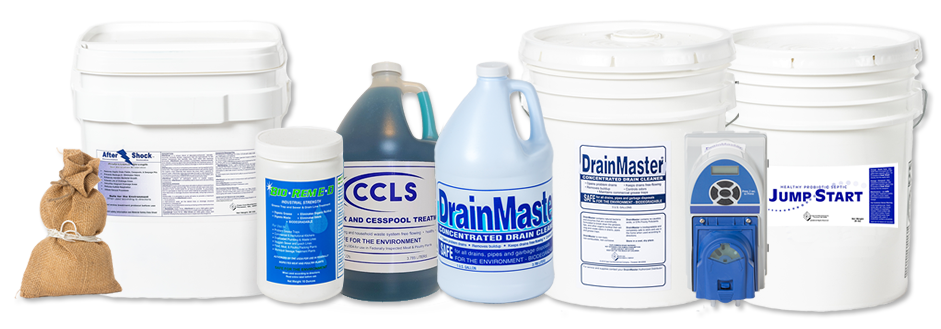
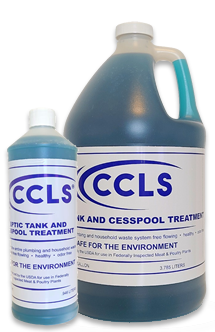
as overly thick scum or solids buildup inside the tank - he can supply you with CCLS liquid bacteria/enzymes
septic system treatment. CCLS contains enzymes immediately available to break down solids buildup in
drains, pipes, septic tank and soil absorption system. CCLS also contains reproductive bacteria for continued
aid in solids digestion and settling, suspended solids removal, and odor control.
Regualr septic system maintenance combined
with water conservation should give you many years of trouble-free use. If not maintained your septic may fail, requiring
excavation and repair or replacement. You will have to endure the expense of this work, as well as aggravation of trucks and
equipment on your property and the disruption to your yard.
Which makes more sense to you? Would you drive your car 100,000
miles without an oil change?
Your septic system should last a very long time if properly designed, installed, and maintained.
Neglected systems WILL FAIL. Isn't it time to start your program of regular pumping and CCLS. The well-being
of your family and your property value are at stake? PROTECT THEM - DON'T NEGLECT THEM.